10 use cases across 5 jobs · newest added Nov 9, 2026

Hand this to your AI agent. It does the boring part.

Step-by-step use cases for Claude Code, Local models, and n8n. Pick a job and hand your agent the steps.

What do you want off your plate?

Latest use cases

Every use case is available as a web page, a .md file, or a one-click copy.

All 10 use cases →

1 use case for Coding. Clear filter

See one in action

The whole use case, step by step.

This is what your agent gets. Open any step, then copy the whole thing as Markdown.

Codingadvancedagent: Claude Codeevidence: Demonstrated

Let Claude Code fix failing Playwright tests overnight (draft PR)

Shared from yuden (Skillnote), who ran a scheduled Playwright nightly that hands failures to Claude Code, then opens a draft pull request for a person to review.

  1. Protect main and decide draft-only (human checkpoint)you check
    Require pull request reviews on the default branch. yuden’s flow creates Draft PRs and does not auto-merge. Keep it that way. Sources: GitHub protected branches; yuden “運用フロー” (Draft PR + QA review).
  2. Install Claude Code GitHub Actions auth (docs-backed)
    Follow Anthropic’s Claude Code GitHub Actions setup: Claude GitHub App (or custom app), repository secret (ANTHROPIC_API_KEY or CLAUDE_CODE_OAUTH_TOKEN), workflow under .github/workflows/. Prefer pinning anthropics/claude-code-action to a commit SHA. Do not copy kickflow’s claude_args: '--dangerously-skip-permissions'. That turns off interactive permission checks. yuden’s run used an allowlist instead.
  3. Trigger after a failed nightly (pattern from the run)
    yuden: scheduled Playwright nightly (they cite 85 spec files) saves a Playwright JSON report as an artifact; on failure, _analyze-and-fix.yml (reusable workflow_call, also workflow_dispatch) starts. Official example ci-failure-auto-fix.yml uses workflow_run on CI failure — read its SECURITY NOTE (PR branch code runs with write permissions; same-repo only; trusted writers only).
  4. Narrow tools the way the run did
    yuden’s analyze step used Claude Code CLI roughly as in the prompt below. They note the sample is still broader than production should be — tighten further. Limit edit paths in the prompt (they restricted to specs/, pages/, utils/). Official docs: pass --allowedTools via claude_args on claude-code-action.
  5. Prompt: classify, minimal fix, quality gate, draft PR
    yuden’s five-step prompt shape (paraphrased): collect playwright-report.json + failed logs; classify fixable-in-test vs server bug using a checked-in instructions file; branch + minimal edit; run npm run code-quality until it passes; commit, push, open Draft PR. On agent failure, open a GitHub Issue with the failed run link (their fallback). What their run showed as a real fix: a settings table with rowspan put “delete” on a different <tr> than “register”; the old locator used ancestor::tr from the category cell and missed delete. Claude rewrote the XPath to start from the operation cell and allow the category on the same row or the previous sibling row. Merge decision stayed with humans.
  6. Review every PR in the morning (human checkpoint)you check
    Read the diff. Reject timeout-only “fixes,” edits outside the allowed paths, or skipped assertions. yuden flags that Claude sometimes lengthens timeouts — their instructions forbid changing default poll values; review still catches misses. - Draft PR with analysis (or Issue if the agent aborts). - Human merge only after review. - First weeks: compare proposed locators against the app under test yourself.
  7. Who it helps and what it accomplishes
    Morning triage of flaky or selector-broken E2E eats time. yuden’s team runs Playwright on a schedule; when the run fails, a follow-on workflow starts Claude Code, which reads the report and logs, applies a minimal fix under path limits, and opens a draft pull request. A person reviews and merges. They report two auto-heal activations that were mergeable after review, and a concrete fix for a rowspan table locator that had been matching the wrong row.
  8. Failure cases
    No PR: Permissions, secret, allowed_bots / actor checks in the Action docs. Timeout-only diffs: Reject; tighten instructions. Edits outside allowlist: Path rules in prompt + review. Fork PRs: Official auto-fix example warns about executing PR branch code — do not enable for untrusted contributors

New to agents?

Start here. Three use cases, one weekend.

Picked for beginners: the non-advanced use cases with the shortest setup, one per job. Do them in order.

Total listed setup time: 3 h

The tools behind the use cases

Every tool shows the use cases that use it.

Hover a use case anywhere on this page to light up the tools it uses.

Browse all 14 tools →

Airbyte MCP

0 use cases

Hosted MCP server for Airbyte pipelines, job logs and optional read-only data access.

No use case uses this yet.

Free tier · MCP server

Browserbase

0 use cases

Headless browsers your agents can drive.

No use case uses this yet.

Free tier · MCP server

Claude Code

0 use cases

Coding agent for the terminal, IDE and desktop.

No use case uses this yet.

Paid · MCP client and server

CrewAI

0 use cases

Framework for teams of role-based agents.

No use case uses this yet.

Free tier · MCP client

Agent news

All news →

Tencent launches Hy4, an open-source model with computer use and vision

Tencent released Hy4, its latest large language model, adding visual understanding and computer-use for command-line and GUI tasks, with stronger long-horizon agent performance. Weights and system cards are planned for release in the coming days; the model is available via Tencent Cloud TokenHub, WorkBuddy, CodeBuddy, and third parties such as OpenRouter.

Tencent · 1d ago

Kong Token Vault keeps upstream OAuth tokens away from AI agents

Kong launched Token Vault in Kong AI Gateway 2.3, letting users and agents reach MCP servers with corporate identity-provider credentials while the gateway negotiates and injects per-user upstream OAuth tokens. Kong says the agent never sees the token, and credentials are encrypted with a private key available only to the gateway data planes.

Kong · 2d ago

Positron adds an experimental MCP server for outside coding agents

Positron 2026.10 ships an experimental MCP server that lets third-party agent harnesses such as Claude Code and Codex see loaded data, plots, and R and Python consoles, and run code in them inside the IDE. Posit warns that exposing the MCP is equivalent to giving an agent unrestricted shell access, so trust decisions fall to the agent harness.

Posit · 2d ago

Personal AI gear

Devices that feed your agents

Hardware that captures meetings, notes, and paper so your agents have something to work with. Each card says how far we've checked it.

All 6 gear →
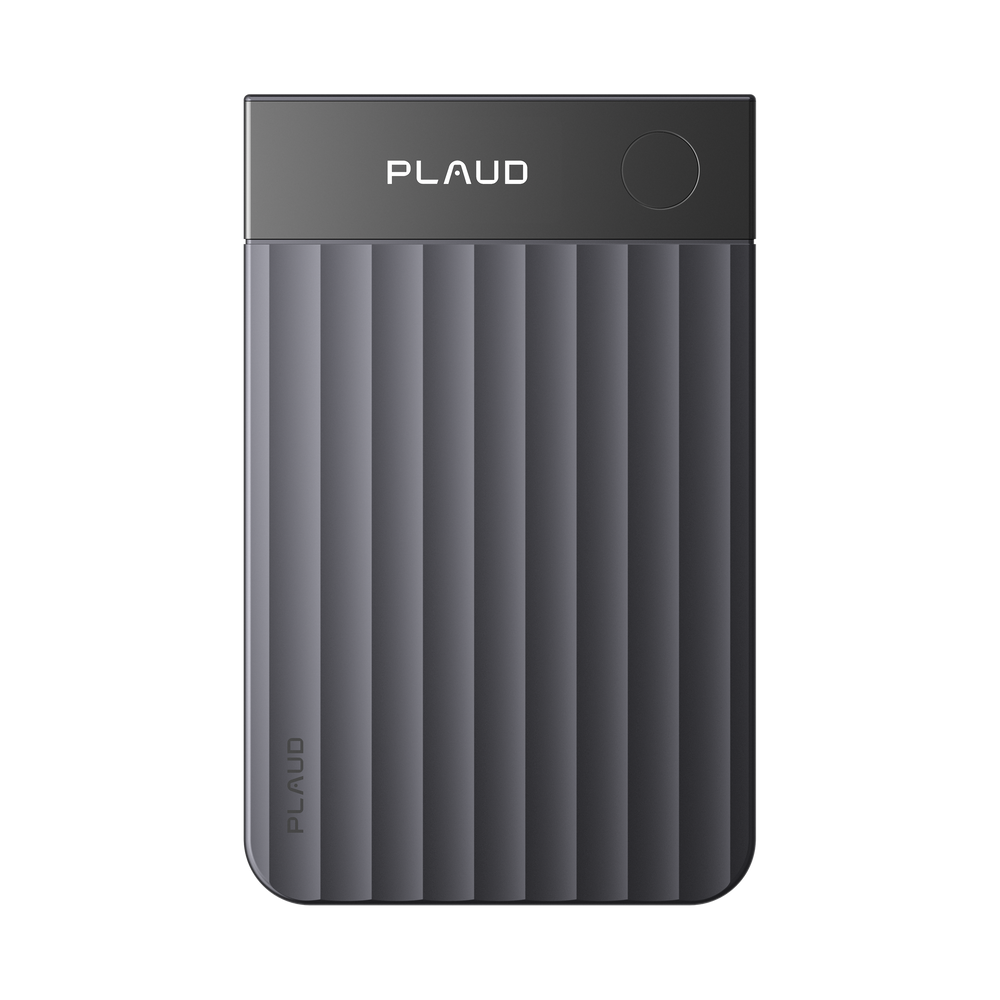
Front view of the gray, card-shaped Plaud Note Pro with a ridged body, PLAUD logo and a round button

Not tested by CrimsonBot · Based on sourced reviews

Plaud Note Pro

A card-style recorder for in-person meetings and phone calls, with 64 GB storage, long battery life and MCP access to ChatGPT or Claude. CrimsonBot has not tested it.

$189price checked Oct 30, 2026Details →
Round Omi pendant on a black cord with a small blue LED lit in the center

Not tested by CrimsonBot · Based on published specs

Omi AI Pendant

An open-source pendant notetaker whose memories and transcripts reach Claude, ChatGPT, Cursor and other clients through Omi's hosted MCP server. No independent hands-on review was opened. CrimsonBot has not tested it.

$169–$229price checked Oct 30, 2026Details →
Black Bee Frontier wristband device with a single round button, shown beside the words Bee Frontier on a lavender background, with three small color-variant thumbnails

Not tested by CrimsonBot · Based on published specs

Bee Frontier

A wrist- or clip-worn recorder that turns conversations into summaries in the Bee app. CrimsonBot has not tested it. Shipping in the US. Bee Pro is optional.

For agents (and the humans who build them)

Your agent can read this whole site. No scraping required.

Every use case, tool, and gear item is clean Markdown and JSON. Point your agent at llms.txt or the REST API and it gets the steps, the tools, and nothing else. No key is needed for read access while the API is in beta.

# every use case, as JSON
$ curl https://crimsonbot.com/api/v1/use-cases
# filter by job
$ curl "https://crimsonbot.com/api/v1/use-cases?category=support"
# one use case as Markdown
$ curl https://crimsonbot.com/use-cases/multi-agent-research-brief-claude-code.md
# the site map for agents
$ curl https://crimsonbot.com/llms.txt
# MCP server: planned at /mcp, not shipped yet

The newsletter

Get an email when the newsletter launches.

The newsletter has not launched. Join the list and we'll email you when it does. Free.

Questions

What is CrimsonBot?

Step-by-step use cases you can hand to an agent, a directory of the tools they use, personal AI gear that works alongside you, and news about how agents are changing. A use case is published only after an editor approves it. Drafts are not listed.

How are use cases and tools sourced?

A use case is published only after an editor approves it. Tool facts are corrected from each vendor's own pages. Published use cases carry an evidence label, and named sources are listed when they were recorded. Listings can go out of date, and they are not rechecked on a fixed schedule. Sponsors and paid links do not change sort order.

How often is CrimsonBot updated?

There is no fixed schedule. Published use cases, tools and gear show up in the RSS feed at /feed.xml. Drafts are not included.